

Finns in New York City: Preserving the Legacy of Finntown in Brooklyn
In this article, our focus will be on the lives and legacies of the Finns who made a home of New York City in the 20th century. Where did Finns settle within the city? What were their lives like? What kind of a mark did they leave on the places they lived?
We chronicle the history of Finns in the Big Apple with the help of Mr. Robert Saasto, Esquire, a Finnish-American lawyer who has made significant efforts to keep the memory of the Finnish history of New York alive. His grandparents came from Finland in the early 1900s, and he grew up in one of the two dozen co-op apartment buildings all around Sunset Park, Brooklyn, the center for the Finnish-American community at the time. We interviewed Mr. Saasto on his memories of Sunset Park, the importance of recognizing Finnish immigrants’ legacy, and his top picks for the best places to visit for those interested in Finnish NYC history.
Just like today, at the beginning of the 20th century, the Big Apple attracted many with its opportunities: the land of the free offered its inhabitants not only the much-needed freedom, but jobs as well, increasingly scarce in many European countries at the time. New York City’s booming construction industry of the early 1900s and 1920s attracted Finnish immigrants arriving on the shores of North America, many of them settling in the electric and exciting city. Sunset Park in Brooklyn and Harlem in North Manhattan were the two hearts of the Finnish immigrant community in 1900s New York.
Sunset Park in the southwestern part of the Brooklyn borough was the largest and of the New York “Finntowns” – at its height it was home to some 20,000 Finns, and the community was strong and active from the early 1900s well into the 1950s. Sunset Park had social halls, churches and organized labor groups. There were Finnish restaurants, bakeries, markets, taverns, shops, and saunas, and the Finnish language was commonly spoken.
This is where Mr. Saasto spent his childhood. We asked him to share a memory of his early years in the heart of Finnish New York.
“My earliest memory as a child, perhaps 4 years old, is playing in the courtyard of the Finnish co-op where I was born. I have many memories of playing with my twin brother and sister and watching TV in Mummo's (Grandma’s) co-op apartment. She only spoke Finnish to us. I specifically recall her saying “Älä hyppää" (Don’t jump) as we were jumping on the couch and "Mene ulos" (Go outside) when she was exasperated and had enough of us. Reading those expressions in a Berlitz Finnish to English language phrase book years later would inspire me to begin studying Finnish when I was in my thirties.”
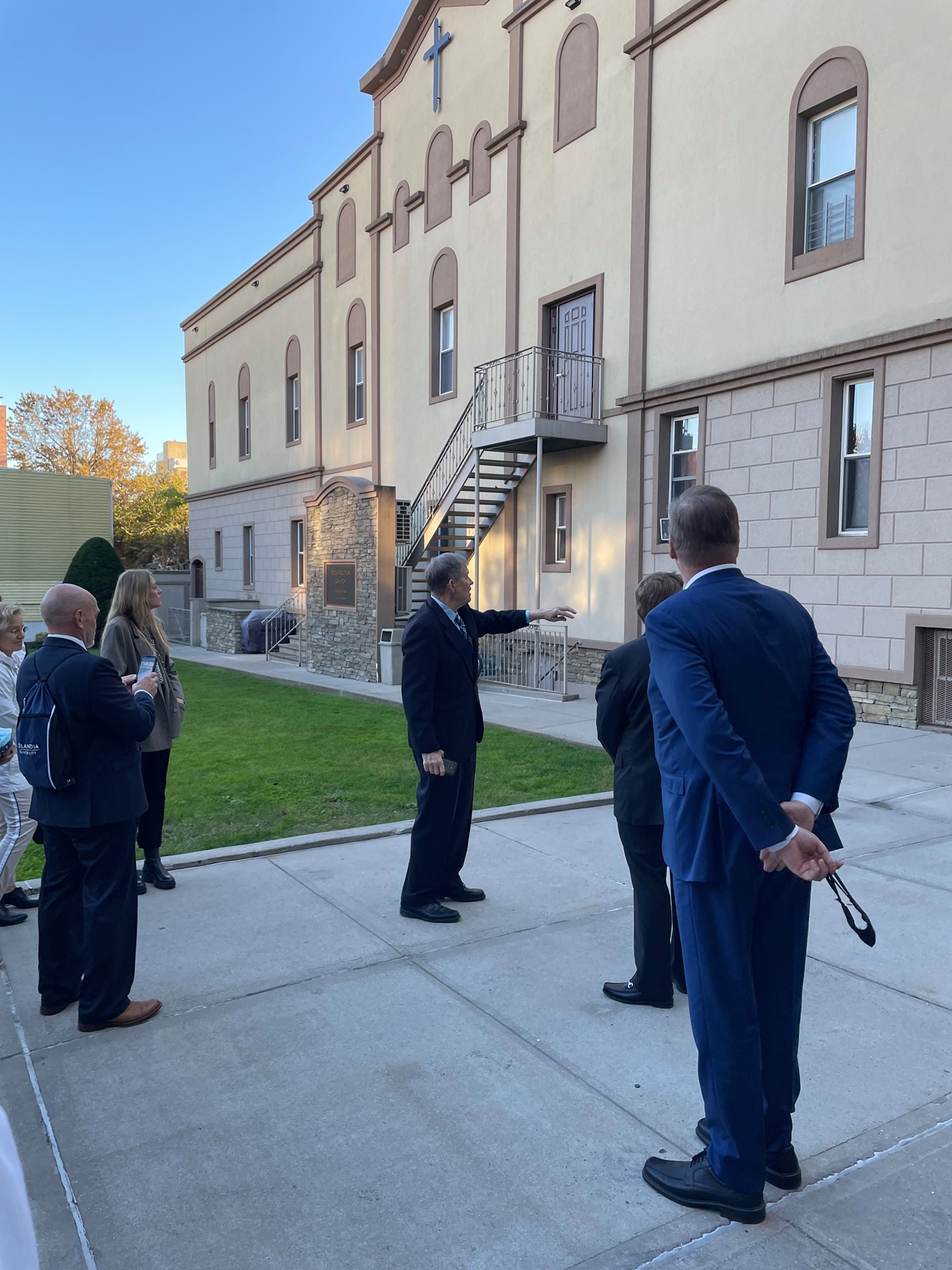
He also attended events at Imatra Hall or ‘Finn Hall’, the most significant social gathering place for the Brooklyn Finns, built in 1907 by and for the Finnish community. Sold in 1997 and converted into a church, the building still stands as a reminder of Finnish New York history.
“I remember as a child going to the Imatra Hall and seeing the dance floor full with people dancing the polka. My twin brother and I, perhaps 12 years old and less than 5 feet tall, would be with our parents at the bar. The dance floor would be empty, a slow dance would come on, and my father would give each of us a nickel to go across the dance floor and ask two beautiful tall Finnish girls to dance. Of course we were never refused. That created quite a sight for all to see.”
Finns introduce cooperative housing to the U.S.
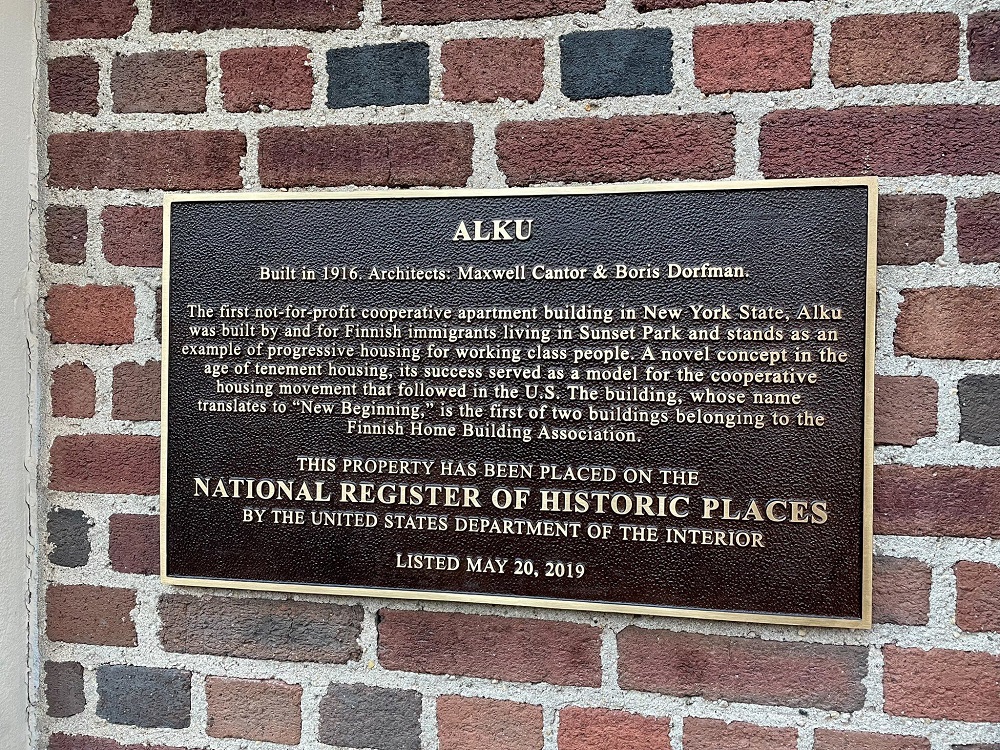
In Sunset Park, Finnish immigrants built the very first cooperative buildings in the U.S.: Alku One, built in 1916, and Alku Two, built in 1917. The name Alku means ‘new beginning’, and that’s what the buildings signified – a fresh start for the Finnish immigrants who had traveled far from home to find a new life and freedom. Now, plaques decorate these historic buildings – they were recognized by the U.S. Department of the Interior and added to the National Register of Historic Places in 2019.
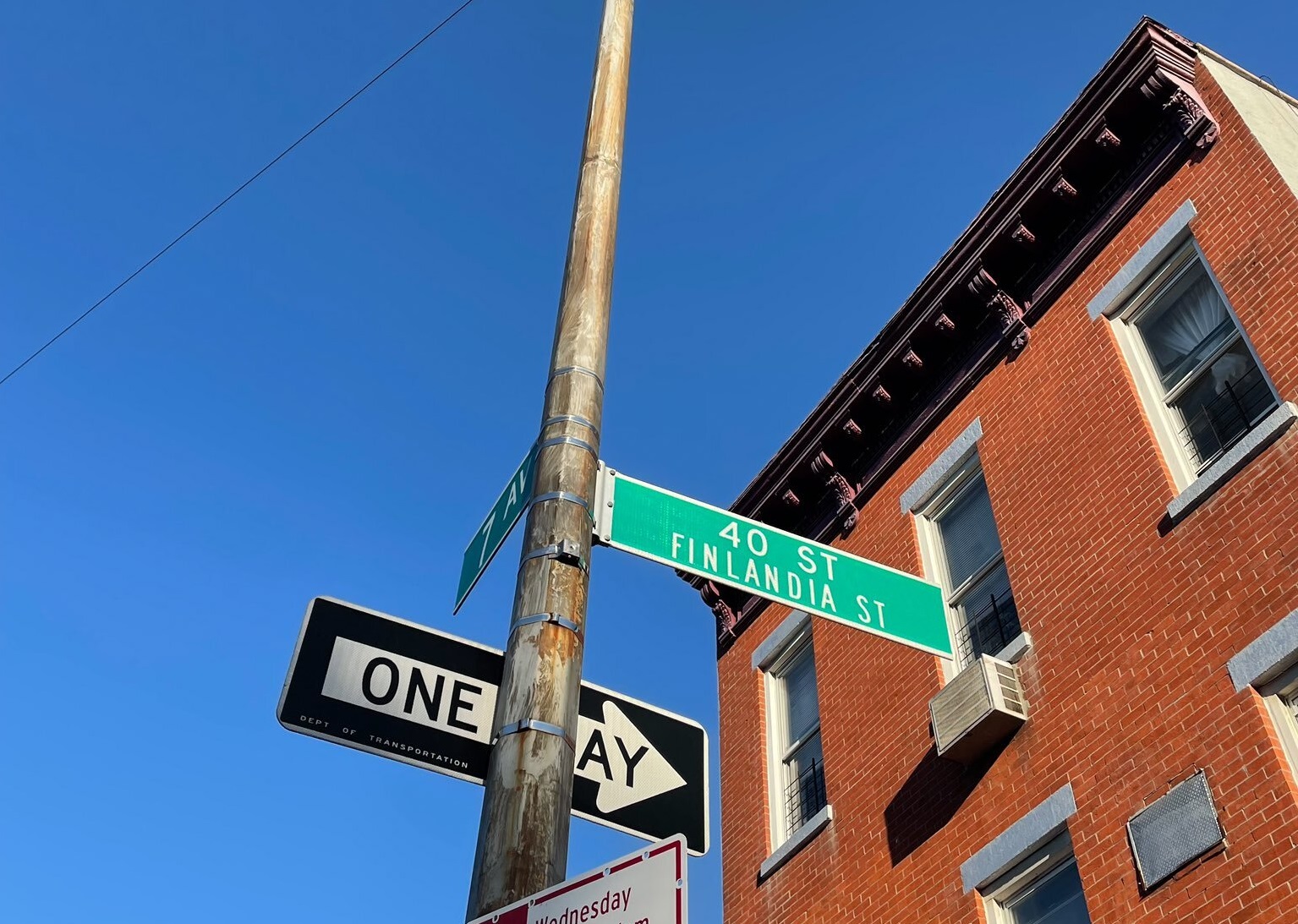
To date, 21 commemorative plaques have been installed on the co-op buildings built by Finns, and in 1992, a ‘Finlandia Street’ street sign was installed at 40th street and 7th Avenue to commemorate the area’s history and Imatra Hall’s 100th anniversary. This has all been in large part thanks to the efforts of Mr. Saasto. How did he end up as the central figure of the project to keep the legacy of Finnish New York alive?
Mr. Saasto tells us that his family moved away from Finntown when he was five years old, but they often returned to visit relatives or Imatra Hall. None of his friends were Finnish, but he recalls always being proud of his Finnish heritage.
“I was proud of that background from everything that I read or heard about Finland: paying back their WW2 reparations, famous runner Paavo Nurmi’s accomplishments, the Winter War, olympic gold medals, ski jumper Matti Nykänen, etc.”
In the 1980s, Mr. Saasto, now a young lawyer, was asked to help the Imatra Hall association. The younger generation was leaving and assimilating to the American mainstream culture, and the building had to be sold. He brought about that sale, creating the Imatra Foundation, so the funds from the sale would go to Finnish causes. He also became a member of the Board of the local Finnish New Yorkin Uutiset magazine, and was instrumental in merging that paper into the Amerikan Uutiset, located in Florida.
“I became an instrumental part of the change in Finntown. I recognized that the day would come when there would be no more Finns in Finntown. The life that I experienced there with my grandparents and parents would all end. If I didn't do it, no one else was going to do it. I was in a unique situation in that not only did I see what was happening, but I was in a position to do something about it.”
He notes that the contributions of the Finns who came to the U.S. were enormous considering the size of Finland. Not only did they build four-story apartment buildings with co-op units with large ceilings, windows, and a spacious living space for that time, he says, but they did so in the spirit of ‘talkoot’ (voluntary, communal work):
“Finns would cooperate and band together to build these beautiful, well-built buildings in the form of cooperative ownership. Each unit owner shared equally the costs involved. More than 30 buildings around Sunset Park were either built or converted into co-ops. They were the first co-ops built as not-for-profit in the U.S.. That was and is a major achievement!”
Witness living history of Finntown by visiting Sunset Park
For those interested in Finnish New York history, Mr. Saasto recommends visiting Sunset Park and its many Finn-built co-operative buildings that are now graced by commemorative plaques. Each of the plaques have a different name depending upon the unique history of the building – Many had nicknames such as “Moskova” (Moscow), where left-leaning people once lived, or “Köyhäintalo” (poorhouse), to poke fun at where the relatively well-off lived, or “Pitkätalo” (long house), due to its size. Although there were significant Finnish American populations in Harlem and the Bronx, too, unfortunately there are no physical plaques or other designations to point these locations out to a visitor.
The Sunset Park Finntown’s boom years ended in the 1960s, as Finnish-Americans started to disperse and businesses and social centers closed, but its legacy is now safe, thanks to the efforts of Mr. Saasto. We ask him what the effort to preserve the Finnish New York’s history and his many significant achievements mean to him. Why is it so important to keep New York’s Finnish heritage alive?
“I wanted the Finns who came here, like my grandparents, to be recognized for this major achievement, not only in New York, but nationally. The first commemorative plaques inspired me to commence my project to get plaques on all the buildings, so that anyone walking by would recognize their significance and the contributions of the Finns who came here. I felt strongly that this major contribution should not be forgotten.
The plaques would remain here forever, and be a source of pride for not only Finns who might one day visit, but also for all descendants of Finnish-Americans.”
In our recent article, we covered the early history of Finns in the U.S. and the Great Migration from Finland to North America at the turn of the century – read it here.
Harlem, one of the two twentieth-century New York Finntowns, was a small, familiar piece of the homeland for the Finns who inhabited it. There were Finnish businesses, churches and halls, as the American Finns called their gathering places. At best, 8,000–9,000 newcomers from Finland lived in the area, supporting each other through the challenges of adjusting to a life across the ocean. At the beginning of the 20th century, the nascent Finnish labor movement was an increasing influence on the immigrant population: New York Finns organized labor and social groups, and in 1917, the New York United Finnish Branch of the Socialist Party bought a Beaux Arts building in Harlem, at 2056 Fifth Avenue and West 127th Street. It was named Työväen Talo (Workers’ House), known as Fifth Avenue Hall or Finn Hall. While Harlem was a lively center of the Finnish community in the early 1900s, by the 1950s, the borough had largely emptied of Finns, many of whom moved to the other side of town, to Sunset Park, Brooklyn.
Text by: Sessi Trapnowski, Communications Intern at the Consulate General of Finland in New York