

Finland contributes to the global transition away from fossil fuels
Over 96% of Finland's electricity is generated from non-fossil sources, one of the highest shares in the world. Total fossil fuel consumption has been halved over the past 15 years, decreasing from 47% in 2010 to 26% in 2025.
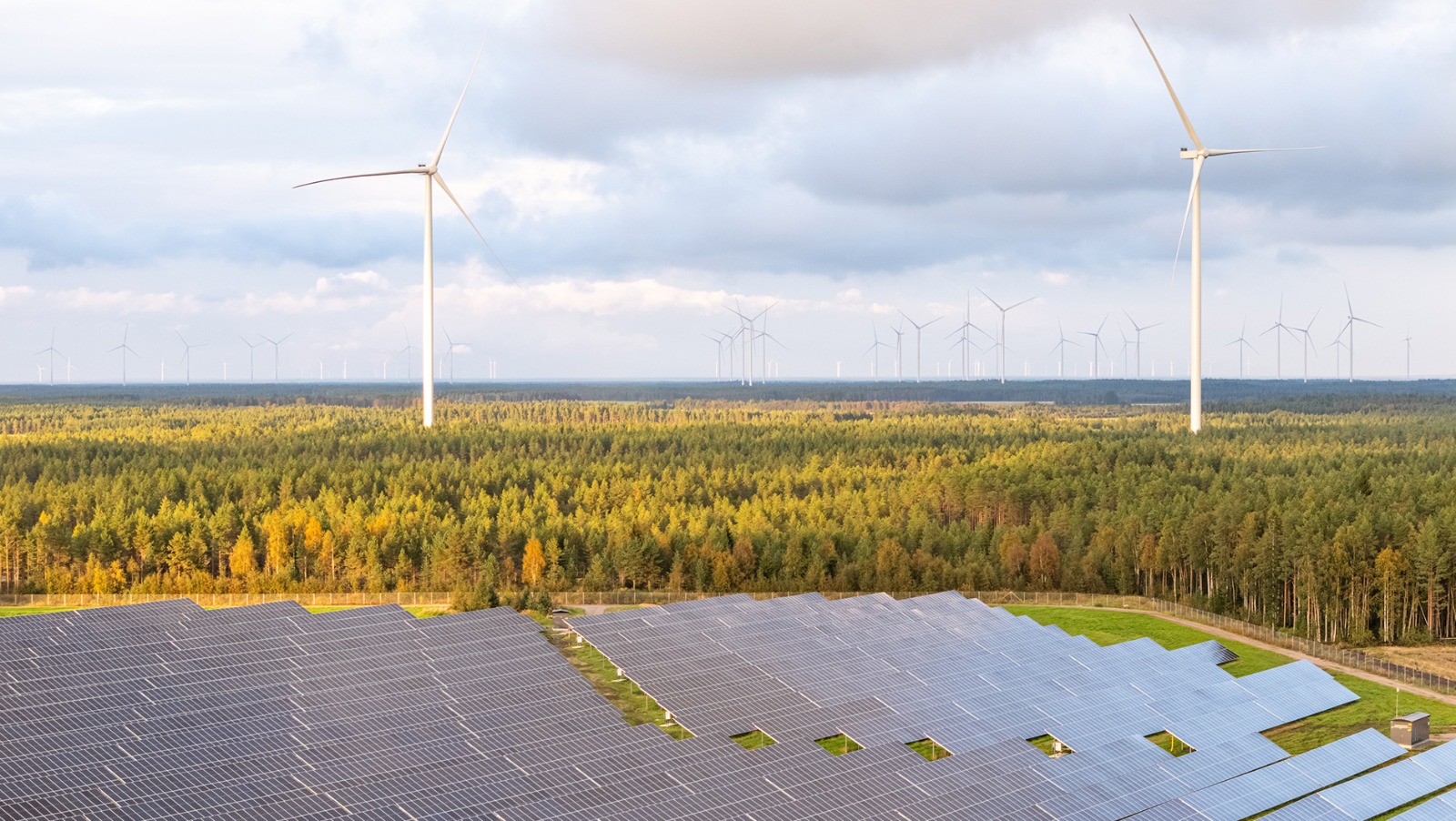
These results highlight Finland’s progress in the transition away from fossil fuels. Ahead of the UN Climate Change Conference (COP31) in Türkiye, Finland is publishing a roadmap as its contribution to the Santa Marta Process, an international initiative launched by Colombia and the Netherlands. Through the initiative, 57 countries are sharing experiences and discussing practical ways to advance the transition away from fossil fuels, in line with the agreement reached at COP28 in Dubai in 2023.
Despite national characteristics, such as a cold climate and long distances, Finland has made significant progress in reducing its reliance on fossil fuels.
Phasing out fossil fuels is essential for achieving global climate goals. The burning of fossil fuels accounted for 74.5% of global greenhouse gas (GHG) emissions in 2024.
For this reason, it is important to share both successful solutions and lessons learned. International initiatives such as the Santa Marta Process, alongside the many events and initiatives organised around climate conferences, help countries learn from one another and accelerate climate action.
For Finland, COP31 provides an important opportunity to demonstrate its commitment to the transition away from fossil fuels and to share its experiences with other countries.
Phasing out fossil fuels also strengthens energy security and, consequently, national security by replacing imported fossil fuels with clean, domestic energy sources.
At the same time, the clean transition creates new opportunities for businesses. Many Finnish companies are already contributing solutions that support the global transition to clean energy and low-carbon economies.
Key themes in Finland’s transition away from fossil fuels
Credible targets and predictable policies enable investment
European Union and Finnish climate and energy targets, together with related legislation, create stable conditions and investment certainty for companies. This enables the implementation of emission reduction measures as well as the development of new solutions. In addition to the EU targets, Finland aims to achieve carbon neutrality by 2035, one of the most ambitious targets in the world.
Market-based mechanisms, cost-efficiency and technology neutrality are key principles guiding the phase-out of fossil fuels. For example, the majority of new electricity generation capacity being built in Finland is wind power, which is currently developed without state aid.
An example of successful legislation is the ban on the use of hard coal in energy production by 2029, combined with a dedicated incentive package to support replacement investments. The target was achieved in 2025.
Carbon pricing is the main driver of decarbonisation and the transition away from fossil fuels in the European Union and Finland. The EU’s Emissions Trading System (ETS) is the main carbon pricing instrument and provides a strong incentive for industry to decarbonise. Strong carbon pricing instruments provide predictability and a clear price signal for investments that support the transition away from fossil fuels. Verified emissions from Finnish installations covered by the EU ETS fell by 10.5% in the year leading up to 2025.
Policy is grounded in fundamental and human rights
Climate policy is developed with due consideration for human rights, equality, public health, gender equality, sustainable development and the interests of different groups in society.
For example, during the preparation of Finland’s energy and climate strategy, efforts have been made to ensure that the rights and traditional livelihoods of the Sámi, the Indigenous People of Finland, are not undermined.
Nuclear energy plays a central role in the transition away from fossil fuels
Approximately 40% of Finland’s electricity production comes from nuclear energy.
Finland is exploring new roles for nuclear energy, particularly small modular reactors (SMRs), including their use in district heating and industrial process heat production.
Finland is also a pioneer in nuclear waste management.
Towards fossil-free transport
Fossil fuels remain the most widely used energy source in Finland’s transport sector. Alternative fuels accounted for 20% of total transport energy consumption in 2025.
Electrification and the gradual replacement of fossil fuels with renewable alternatives are key pathways towards fossil-free transport. Under the Fuel Distribution Obligation Act, the required share of alternative fuels in road transport will be 19.5% in 2026 and 34% in 2030.
The use of fossil petrol in road transport decreased by around 39% between 2005 and 2025, while the use of fossil diesel declined by around 19%.
Voluntary measures play a crucial role
Voluntary Energy Efficiency Agreements and sector-specific low-carbon roadmaps are important tools for accelerating emission reductions at grassroots level.
Participation in international initiatives and co-operation
Finland has long been a member of several international initiatives that advance the energy transition and support the development of global carbon markets.
Finland supports developing countries in their efforts to transition away from fossil fuels through international climate finance. For example, Finland has invested over EUR 240 million in multilateral and bilateral blended climate funds. These funds finance projects and attract private investment that supports the transition to low-carbon economies, including renewable energy generation, battery energy storage systems and the electrification of transport.