
EU accession talks with Ukraine and Moldova begin – what happens next?
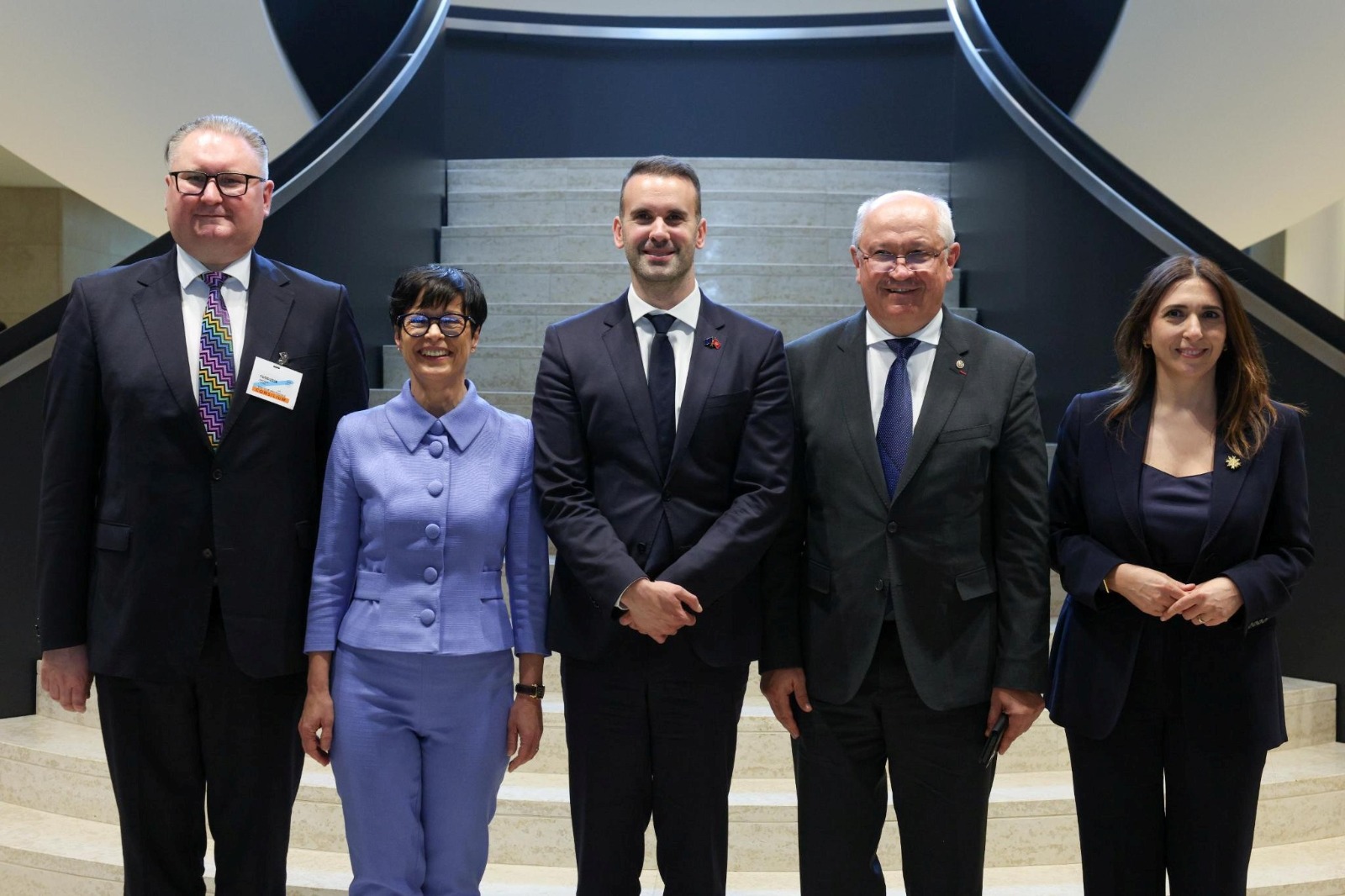
The EU’s enlargement policy has gained new momentum in recent years due to geopolitical changes. In particular, the applications of Ukraine and Moldova have reignited debate about the future shape of the Union. On 15 June, both countries officially opened their EU accession negotiations in Luxembourg, marking a major milestone in their path towards membership. However, the road to accession remains long and demanding, requiring extensive reforms from the candidate countries and unanimous support from all EU Member States.
Each country’s progress toward membership advances at its own pace, under strict conditions. A key requirement for launching official negotiations for these countries was the approval of the so-called first accession cluster, which opened the door for the official negotiations to begin. These clusters are used to assess how prepared a candidate country is to join the European Union. Once negotiations and reforms have been completed in a manner acceptable to both the EU and the candidate country, membership can be granted following the ratification of the Accession Treaty.
The goal of enlargement is to strengthen the Union’s stability and democracy, as well as to increase economic cooperation in Europe. At present, several Western Balkan countries, and notably Ukraine and Moldova are at different stages of the accession process. Progress remains merit-based, with each country advancing according to its fulfilment of the membership criteria.
From candidate status to full membership
Countries begin by submitting an official application for membership to the EU. This application is addressed to the European Council. The Council then asks the European Commission to assess the applicant country's eligibility for membership. Based on the Commission’s opinion, EU Member States unanimously decide whether to grant candidate status and start accession negotiations.
For a country to be accepted as an EU candidate, it must meet the so-called Copenhagen criteria, which were defined in 1993. According to these criteria, a country must have stable democratic institutions, a functioning rule of law, and a society that respects human rights and the rights of minorities. In addition, the country needs to have a functioning market economy capable of competing within the EU’s internal market. The applicant must also be able to adopt and implement EU legislation and commit to the Union’s objectives and obligations, particularly the goals of political, economic, and monetary union.
After Member States reach a unanimous decision, the candidate country moves on to formal accession negotiations. At this stage, the accession criteria play a crucial role. In EU enlargement negotiations, candidate countries are required to adopt the EU’s body of law (the acquis communautaire), which is grouped into six thematic clusters.
The “Fundamentals” cluster covers democracy, the rule of law, and human rights. The “Internal Market” cluster focuses on the free movement of goods, services, workers, and capital. “Competitiveness and Inclusive Growth” includes areas such as taxation, education, and economic policy. The “Green Agenda and Sustainable Connectivity” cluster addresses environmental, energy, and transport policies. “Resources, Agriculture, and Cohesion” relates to agriculture, food safety, and regional development. Finally, the “External Relations” cluster deals with the EU’s trade, foreign, and security policy. The entire process can take many years.
Some processes are faster than others
The EU enlargement slowed down after Croatia’s accession in 2013, as the Union’s focus shifted to internal challenges such as the euro crisis and migration pressures. There were also signs of “enlargement fatigue.” Within the EU, there was growing reflection on whether enlargement had proceeded too quickly, leading to a stronger emphasis on the rule of law, anti-corruption measures, and the effective functioning of democratic institutions. The aim has been to ensure that problems encountered in previous enlargements are not repeated and that candidate countries genuinely meet the requirements before joining. This stricter approach has slowed the progress of some candidate countries. However, the EU’s enlargement process is always merit-based, meaning that each country advances according to how well it meets the membership criteria.
When it comes to the Western Balkan countries, Montenegro and Albania are currently the most advanced, and in their case the target for completing the negotiations has been set for 2028. The other countries, meanwhile, are still significantly further behind at this stage. Interestingly on top, Iceland’s parliament has decided to hold a referendum in August on whether the country should resume EU accession negotiations.
Ukraine and Moldova obtained their candidate status in 2022. Both countries applied for membership immediately after Russia’s war of aggression began. Due to their geopolitical location, it is both crucial and existential for them to become part of the Union. Russia’s war of aggression against Ukraine has, however, brought EU enlargement back to the forefront as a geostrategic priority, making it possible for Ukraine and Moldova to be granted candidate status. The Union also already cooperates with Moldova in the Framework of the European Neighborhood Policy and its ester regional dimension, the Eastern partnership, with a goal to bring Moldova even closer to the EU.
Efforts have been made to gradually integrate the two countries through measures and solutions such as joining the payments area and the roaming area, to bring them closer to the EU. Before the start of the accession negotiations, Ukraine had already completed the so-called screening process, while Moldova completed its corresponding screening process in 2025. Now that the first accession cluster has been completed, more clusters are to follow, maybe already during the summer. The integration process will continue for both countries as they move forward toward new clusters.