

Reflections of a retiring forestry expert: networking is the key to influencing in the EU
What does it feel like to leave a career spanning several decades, from the early days of Finland’s EU membership up to the preparation of the most recent forest strategies? Tapio Kytölä, Senior Specialist in forestry and the bioeconomy, is just about to retire and shares his thoughts with us before relocating from Brussels back to Finland. The interview illuminates an impressive career path at the forefront of EU lobbying – from journalist to attache. It features the advice of an old hand to new EU lobbyists and recalls some of his favourite moments on the job.
How does it feel to retire after such a long and rich career?
Good, on the whole, since I am still in decent physical shape. My wife and I will be relocating to Finland, where our children and many of our friends live. I am sure that there are things in Brussels that I will miss.
What made you want to become an attache – and what was the path that took you there?
I have been involved with EU affairs for almost my entire career, beginning with Finland’s EEA negotiations. This was not a leap into the dark, it was part of a continuum. I was interested in the position of attache, and in 2011 I was employed at the Permanent Representation as a specialist in agriculture. So I was already in Brussels and knew the ropes. I spent some time as a seconded national expert at the Directorate-General for Research and Innovation when the EU Bioeconomy Strategy was most recently revised. I returned to the Permanent Representation for Finland’s EU Presidency. I had agriculture, the bioeconomy and forestry on my agenda. In recent years, I have been able to focus on forestry and the bioeconomy.
What are particularly memorable moments in your career?
I followed the EU membership negotiations as a journalist. I delved into the agricultural policy of the EU in particular, and also gained experience in how to cover negotiations. Esa Härmälä, who led the civil service talks in agriculture, had to answer many tough questions, as did principal negotiator Veli Sundbäck and his right-hand man Antti Satuli.
When our EU membership began, I was in Brussels as a correspondent for the Maaseudun Tulevaisuus newspaper. There was a huge demand for information, and I filed a lot of reports. At the beginning of 1995, the press briefings of the Commission were still in French, but English began to gain ground. As a journalist, I had the privilege of meeting with Commissioners and Ministers. It was a great time. The unofficial summits of ministers of agriculture were the best junkets. Finland’s first Commissioner, Erkki Liikanen, gave regular briefings to correspondents. I met many times with Franz Fischler, Commissioner for Agriculture, most recently in Innsbruck just before Christmas in 2023.
But when I became a government representative, I was able to engage in direct lobbying. I was there at the negotiating tables, though sometimes in the back row. I have appreciated that opportunity, as well as my excellent coworkers and bosses.
Which negotiations do you remember particularly well?
As an outsider looking in, the negotiations of the ministerial summit in Brussels in 1990 that was supposed to conclude the Uruguay Round of talks under the General Agreement on Tariffs and Trade (GATT). The largest demonstration I have ever witnessed was held in Brussels at that time. No result was achieved at the ministerial summit, but it was the starting point for significant reforms to the EU’s Common Agricultural Policy. The Uruguay Round was eventually concluded, and the World Trade
Organisation was founded in 1995.
Subsequently, I have had the opportunity to be involved in negotiations concerning several agricultural policy reforms within the EU. These have always resulted in outcomes favourable for Finland.
In the membership negotiations, Finland gained the right to pay national subsidies for agriculture, as the EU system would not have been sufficient by itself. For southern Finland, however, the Commission regarded this as a transitional measure. In 2013, we were able to put agricultural subsidies for southern Finland on a more permanent footing with a provision in an EU Regulation. We achieved this by bringing acceptable text for the provisions to the negotiating table via the European Parliament. It was fortunate that the Permanent Secretary had taken the Minister to the Parliament and that we had established good working relationships there.
What changes have you seen in your work and in EU lobbying in general over the years?
Because the Commission has the exclusive right of legislative initiative, the Commission is hugely important. Every Commission has a vision that manifests itself in the legislative proposals it creates.
I have been keeping an eye on forestry matters since the beginning of our membership. The land area covered by forest in the EU nearly doubled when Finland, Sweden and Austria acceded to the EU. We took the initiative and lobbied for forestry matters to be coordinated within the Commission. We submitted a statement to this effect to the European Economic and Social Committee, and this concept was also introduced in a report to the European Parliament. It was on this basis that the EU’s first Forest Strategy was prepared under the Directorage-General for Agriculture and Rural Development in 1998.
The next Forest Strategy was prepared in cooperation between the Commission and the Member States. As a result, this Second Forest Strategy published in 2013 was excellent. The Third Forest Strategy was published in 2021. Here, responsibility for preparation was assigned to the Directorate-General for Environment. Input from the Member States was not desired. The first leaked version did not appear until one month before the Strategy was due to be published, and it was too late to make any appreciable impact on its content.
So the journey has been from Member States’ initiative to cooperation between the Commission and the Member States and then to autonomy of the Commission.
What has been the most difficult part and, on the other hand, the most rewarding part of your job?
The most rewarding things have been when our staff and like-minded people have been able to pull together to guide things in a direction favourable for Finland.
Do you have any particular tips for how to lobby the EU?
Networking is the only way to get anything done. You have to have friends in the Commission, in the Member States and in the Parliament. ‘Likeminded groups’ are important.
Is there any individual encounter, situation or incident that has particularly remained with you?
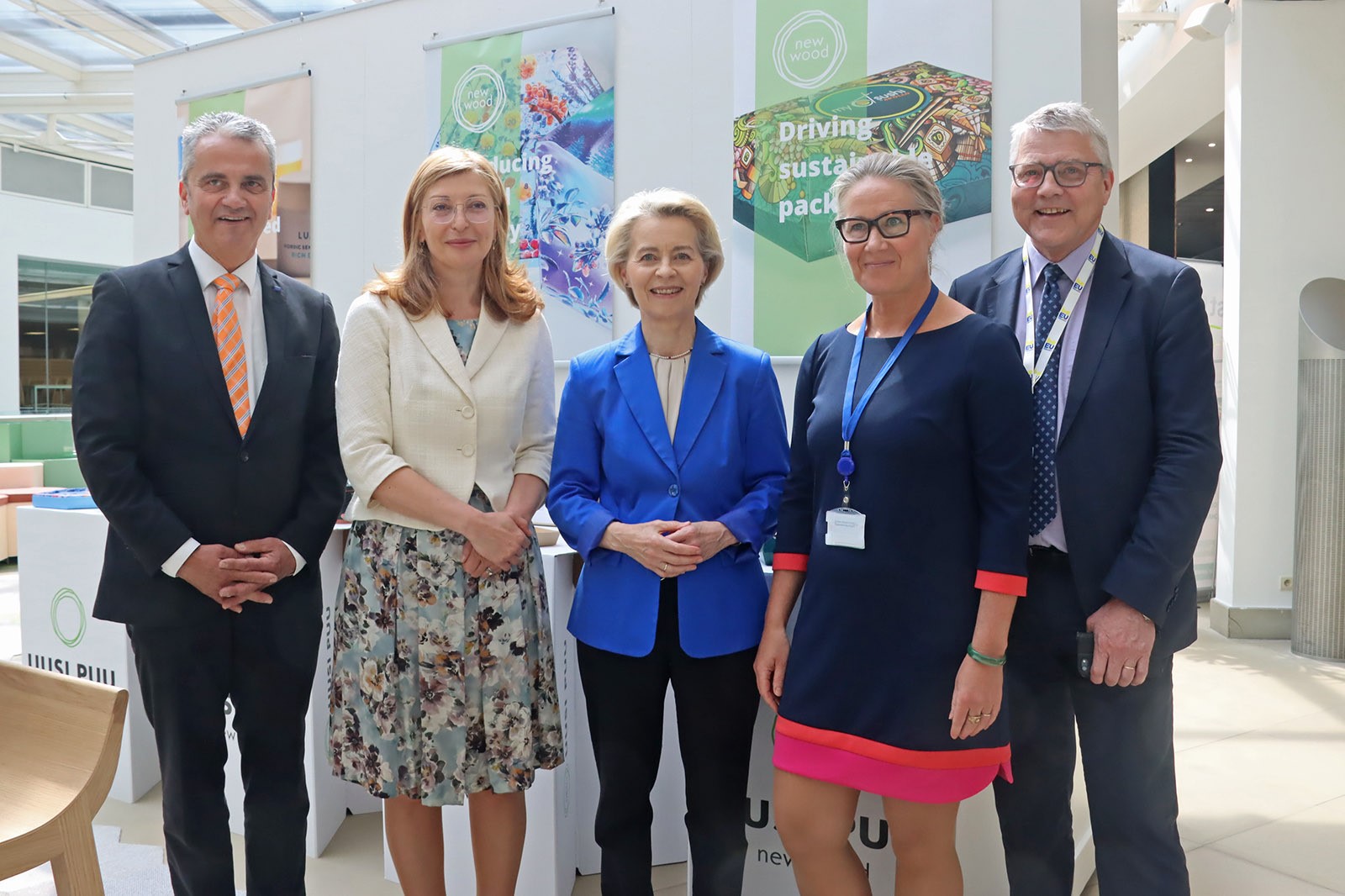
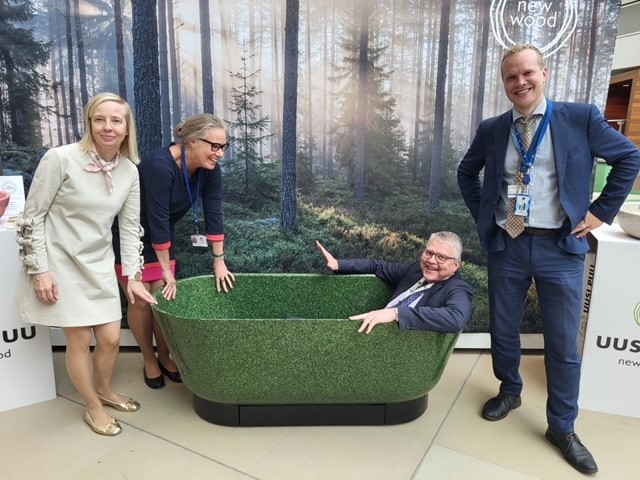
It was gratifying to get a Finnish bioeconomy exhibition on display in the foyer of the Berlaymont for two weeks. I appreciate the support of the leadership of our Permanent Representation in this matter. The cherry on top was when Ursula von der Leyen, President of the European Commission, and Research Commissioner Ekaterina Zakharieva came specifically to see the exhibition on its last day, 6 June, and I had the opportunity of meeting them.
How has your work impacted your worldview or your attitude to Europe?
It is great to have people you know all over the EU. We are in the right crowd.
How would you advise someone starting their EU career, or just aspiring to it?
EU affairs have a huge impact on the everyday lives of Finns. We need competent people who are dedicated to finding European-level solutions that also suit Finland well.
How do you intend to spend your retirement? Travel, hobbies, or something completely different?
First I have to resettle back home in Espoo. It is nice that I already have a couple of invitations to visit friends at their summer cottages, as I do not have one of my own. I will have to take up biking again, and hopefully there will be snow in the winter so that I can ski.
Is there anything you would like to say to your colleagues or to the community where you have been
working that you have not already said?
Huge thanks to everyone for your collegiality, your help and your agreeable company. The Permanent Representation is an inspiring workplace.