

Thoughts on peace, Slush and the future of Cyprus from the winner of Finland-supported Startups4Peace programme
In 2025, Finland funded for the last time the Startups4Peace programme that brings the Greek Cypriot and Turkish Cypriot communities closer together. One of the participants and winners of last year’s programme was Pit-to-table, a successful start-up that transforms discarded olive pits into bio-panels. Bicommunality and peacebuilding are at the core of the company’s operations. Olive pits are collected directly from olive mills on both sides of the Green Line. In addition to suppliers, also accountants, photographers and other staff members represent both communities. “Most importantly, it was always going to be mainly Cypriots taking part in our work, from whichever community. In terms of trying to make a difference, that is always at the forefront”, the founders of Pit-to-table explain. We interviewed two co-founders Mustafa Afsaroglu and Buğra Ebeler.
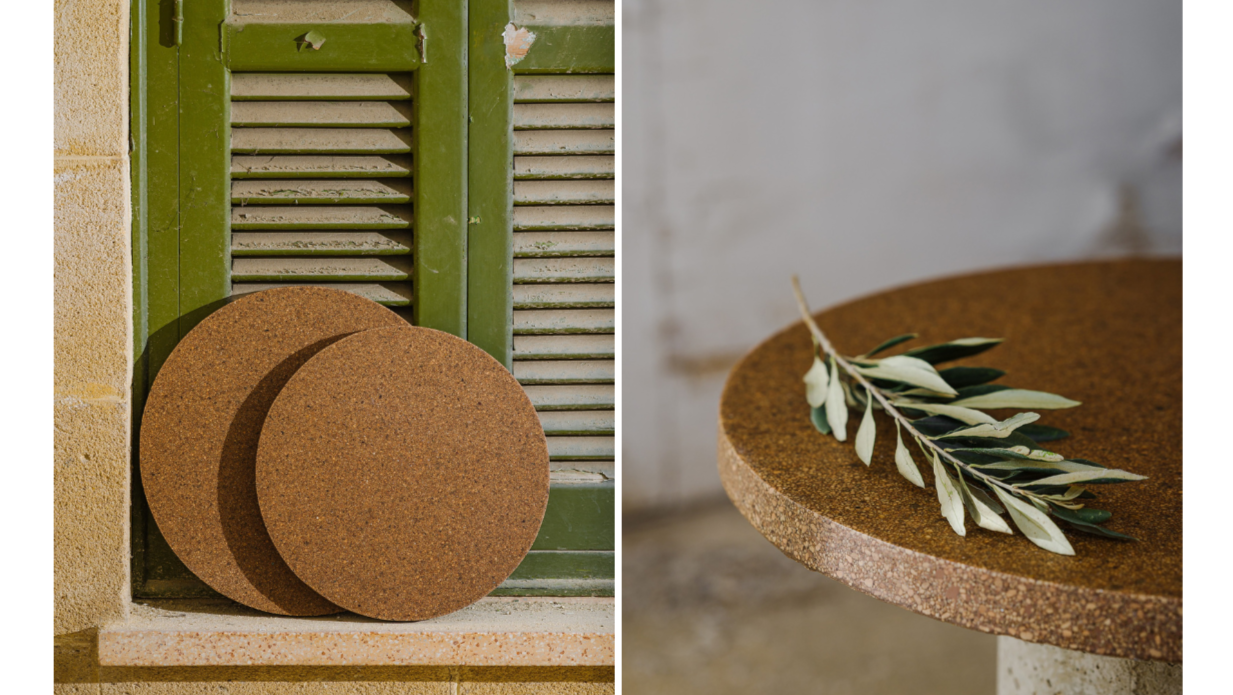
Olive oil is one of the cornerstones of Cypriot cuisine and a key export product. However, olive oil production generates significant amounts of byproducts – mainly olive pomace and crushed pits – that usually end up in landfills. Cypriot bicommunal start-up Pit-to-table is addressing this environmental challenge by transforming discarded olive waste into bio-panels that can be used for countertops, cabinetry and furniture among other applications.
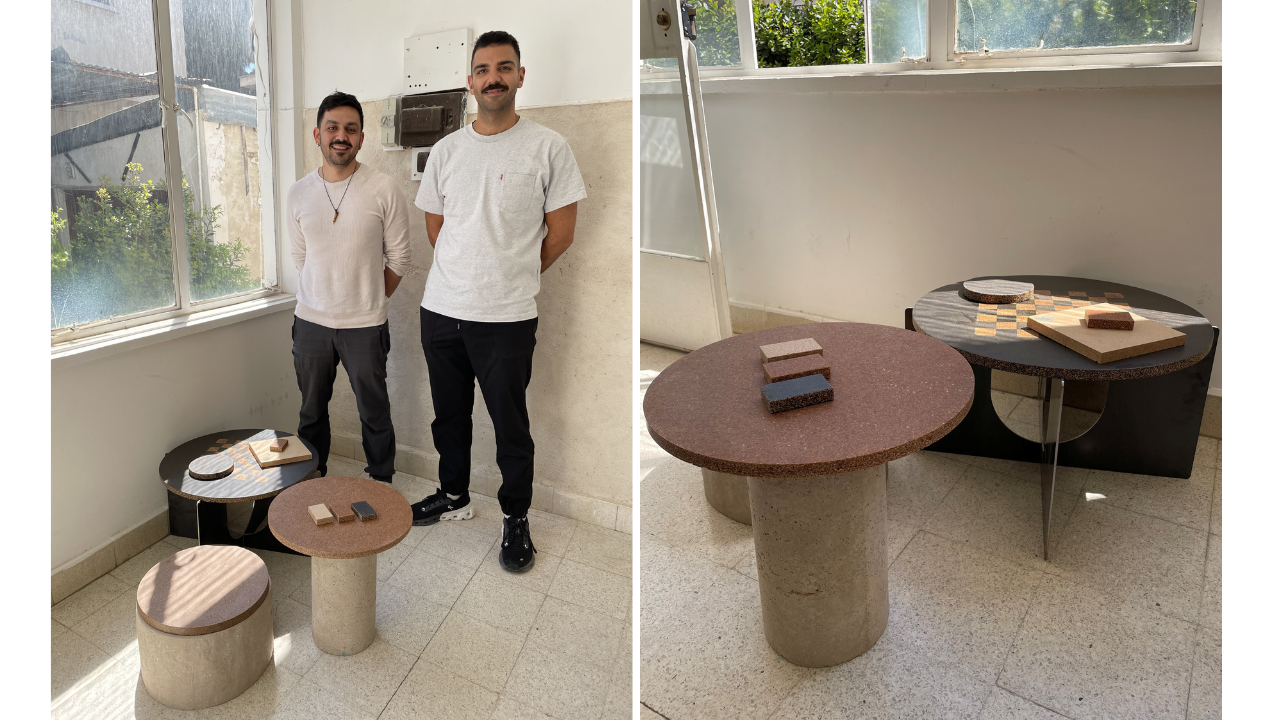
The company is founded by a Turkish Cypriot team: Mustafa Afsaroglu, Buğra Ebeler and Yagmur Fellahoglu.
Bicommunality as a core theme
The positive environmental impact of Pit-to-table is clear. What about the company’s broader societal impact as a bicommunal initiative? Mustafa and Buğra pause for a moment to consider the question before answering. “We did not originally envision much from a societal perspective. Of course, it was always the aim to work with both Turkish Cypriots and Greek Cypriots, and it naturally ended up being that way from the beginning”, Mustafa explains. One of the company’s ambitions has been to put the minority of Turkish Cypriots on the map from the perspective of peacebuilding and bicommunality. The company collaborates frequently with both communities and makes sure to have a holistic approach to ensure equal participation.
Bicommunality is a cross-cutting theme in the company’s operations. Pit-to-table is registered as a company both in the Republic of Cyprus and in the northern part of the island. Olive pits are collected from farmers on both sides of the Green Line. In addition to suppliers, also accountants, photographers and other staff members represent both communities. “Most importantly, it was always going to be mainly Cypriots taking part in our work, from whichever community. In terms of trying to make a difference, that is always at the forefront”, Mustafa adds.
Mustafa has on multiple occasions talked of the Pit-board as a symbol for peace. What does that mean? “Seeing our project as a symbol for peace talks to so many things. First of all, the olive tree is a peaceful symbol. Olive trees and olive oil are something that all Cypriots have a shared heritage with and it goes back to the ancient times on the whole island”, he explains. Mustafa says that the roots and the supply chain of Pit-to-table are entirely bicommunal. Dubbing Pit-board as a “symbol for peace” reinforces this idea. The company is bringing a modern perspective to an ancient olive tree.
Startups4Peace programme and start-up event Slush
Pit-to-table participated in the bicommunal Startsups4Peace accelerator programme (Su4P) in 2025. Su4P is a peace-building initiative for start-ups in Cyprus, designed to bring the Greek Cypriot and Turkish Cypriot communities closer together while giving aspiring entrepreneurs the opportunity to build and expand their businesses. The Embassy of Finland in Nicosia has funded the accelerator for 10 years, in the latest years in collaboration with the European Union. The European Union will now continue to support the project on its own.
Mustafa and Buğra describe the programme as a useful and memorable experience. "The most valuable part for us was having the opportunity to revisit our pitch and our strategy on reaching the correct market. The programme was organized in the form of boot camps. During these sessions, we had to disconnect from everything and only focus on this. We needed that", Buğra says. During the programme, the team established connections with participants from both communities and Buğra says he is still in frequent contact with the people he met.
According to Buğra, Startups4Peace has contributed significantly to bicommunality in Cyprus. He says that most Greek Cypriots he met during the programme had never before really interacted with Turkish Cypriots. They might have never even crossed the Green Line. “They had some crazy stories and prejudices beforehand. Once we met, however, they realized that we are similar people who share the same culture and the same way of life”, Buğra explains. He views the programme as especially important for these individuals who were able to reach each other across the Green Line for the first time. “The programme’s contribution to peace – or future peace – is significant in our point of view”, he adds.
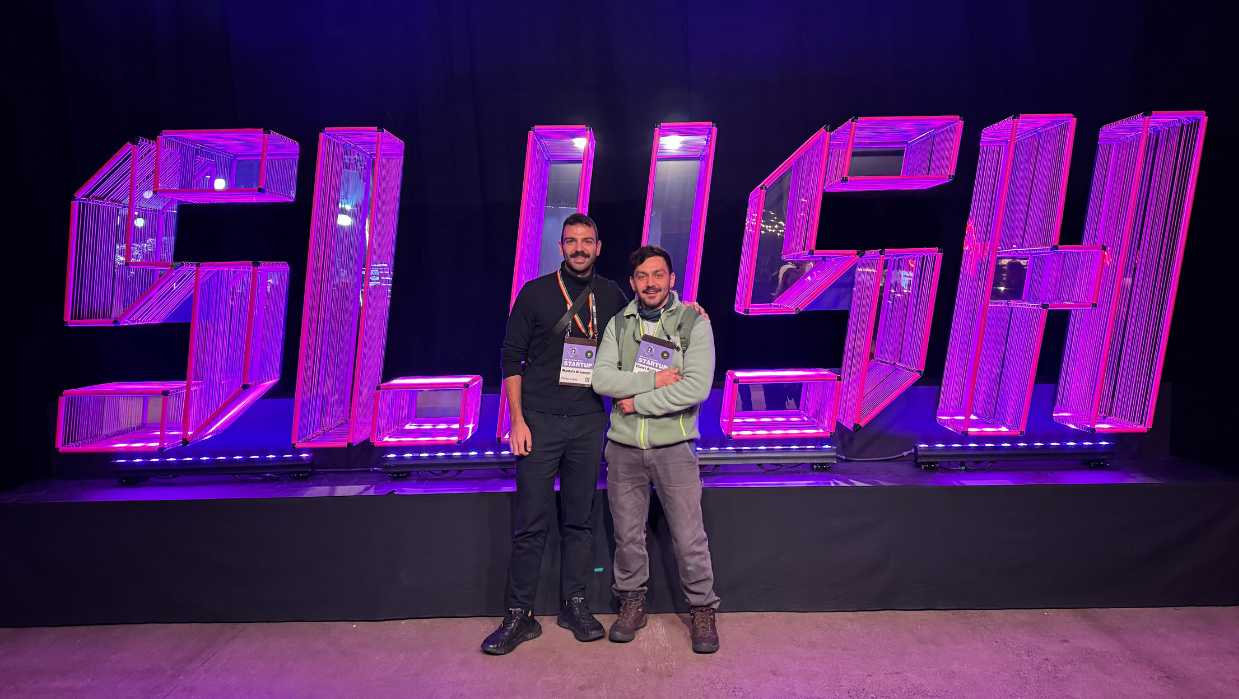
Pit-to-table was one of the three winners of the Su4P Pitching Battle and thus had the chance to attend start-up event Slush in Helsinki, Finland in November 2025. “That was an amazing experience! It was a real environment with real investors to test the product and ourselves. We got very useful feedback to take home”, Buğra rejoices. Besides the accelerator programmes, the team had not really seen many other start-ups and pitches until Slush. Buğra describes it as an encouraging experience to be able to compare their pitch to others. “Once we saw the other pitches, we felt like ‘wow, we are not that far off from them’. If you ask me if I would go to Slush again, the answer is ‘yes definitely’”, Buğra smiles.
The team also surprisingly met with a Cypriot investor during Slush. Buğra and Mustafa describe how excited and proud the investor was to see a product like theirs from Cyprus. “He was so empowered and emotional by this initiative. He saw us as Cypriots and that was it, no difference whether we were Turkish Cypriots or Greek Cypriots. He was just so happy to see that people from the island could create something like this”, Mustafa summarizes their meeting.
Entering the Finnish markets
Mustafa and Buğra describe their trip to Helsinki as very good but also overwhelming. On top of attending Slush, they met with designers and architects outside of the event. The team met also with a Finnish retailer and importer of eco-friendly building and interior design materials. This company has now become the exclusive distributor of Pit-board in Finland and the Baltics.
How did that happen? “There is not really a romantic story to tell”, Mustafa and Buğra laugh. They were introduced to the distributor by a friend Mustafa knew from the design industry in London. After approximately three months of work behind the scenes, Pit-board became a part of the company’s selection. “That is our big success story from the Helsinki trip: not just that we went to Finland and Slush but also the tangible result”, Mustafa says.
Coming to the end of the interview, it feels fitting to ask what the team thought of Helsinki as a travel destination. “Very cold but a great city, very clean, good food, good spas and good saunas of course”, Mustafa summarizes with a laugh.