

Weather Station Project in Ethiopia – A great cooperation from 2019
Why the Project Began Our goal was to establish a reliable, modern weather station infrastructure to support researchers, farmers, and local communities with accurate data and forecasting capabilities together with Ethiopian Meteorological Institute, Vaisala, and Finnish Meteorological Institute. Ethiopia’s weather conditions are inherently unpredictable and remarkably diverse, shaped by dramatic variations in altitude, regional climates, and seasonal patterns. In recent years, climate change has added an additional layer of complexity, increasing the frequency and intensity of extreme weather events. These shifting conditions have underscored the need for reliable, modern weather monitoring systems—and laid the foundation for our project. First Steps and the Groundbreaking Ceremony
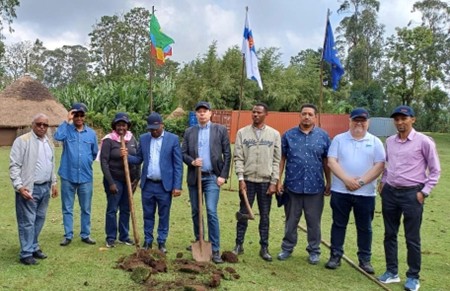
Groundbreaking ceremony in Damboya on 10.6.2025.
From left: Mr. Gezahegn Alemu (Embassy of Finland), Mr. Dawit Zergaw (PEJa), Ms. Clemencia Ongaki (VAISALA), Dr. Asaminew Teshome (Ethiopian Meteorological Institute-EMI), Mr. Tomi Särkioja (Embassy of Finland), Mr. Adane A/Woreda, Administrator, Mr. Henock Hailu (EMI), Mr. Esa Kurula (VAISALA OY), and Mr. Tadesse Chimdi (EMI).
During the Groundbreaking ceremony, everyone literally rolled up their sleeves as our partners gathered in Damboya, shovels in hand, to officially launch the construction phase. Present at the event were us, the Embassy of Finland, Ethiopian Meteorological Institute, Vaisala and most importantly the Woreda Acting Administrator. The atmosphere was filled with excitement and anticipation, as this moment marked the true beginning of the Damboya segment of the project. Of course, before the first shovels hit the ground, the site had already been carefully surveyed and compared with several alternative locations. But once the shovels finally broke the soil, the decision became final, giving the project and the chosen site their official seal.
Challenges Along the Way
Long-term projects are rarely free from complications, and our cooperative project was no exception. Both scheduling and shifting weather conditions brought their share of challenges, as did issues related to transportation and the reliability of various technical components. Despite these hurdles, our solution‑oriented team managed to overcome each obstacle, and the progress made within less than a year has been remarkable. Now, we are already standing on the threshold of completion.
Before the team headed out to the Damboya weather station site it had a Steering Committee meeting to summarize and provide a comprehensive overview of the progress and status of the project in Hawassa on 25th of February 2026. The Director General of the Ethiopian Meteorological Institute, Mr. Fetene Teshome summarized the project situation. He highlighted the strong collaboration throughout the process and expressed sincere appreciation for the essential support provided by the Embassy of Finland and the Ministry for Foreign Affairs, whose involvement helped resolve several bottlenecks. Although the project faced delays due to the pandemic and other unforeseen challenges, the progress achieved—especially in the past months—has been significant. Installations are now close to completion in Damboya station, with only the final solar‑related tasks remaining for the radar, while the air‑quality and lightning systems have already been finalized. He noted that the experience gained during the two‑year installation phase offers valuable lessons for improving efficiency, familiarization, and planning in future implementations.
He emphasized that Ethiopia is a vast country with a growing need for an expanded network of high‑quality stations, and that the best practices developed here can be scaled up to support broader national coverage. The project was described as an important benchmark that can also help attract additional collaborations, including with other meteorological services and sectors such as aviation. Work is advancing towards system integration and making data available through the full SmartMet platform from Finnish Meteorological Institute, which remains a key priority. He concluded by recognizing the achievements reached in a relatively short time and expressing confidence that the partnership will continue to accelerate progress in future phases.
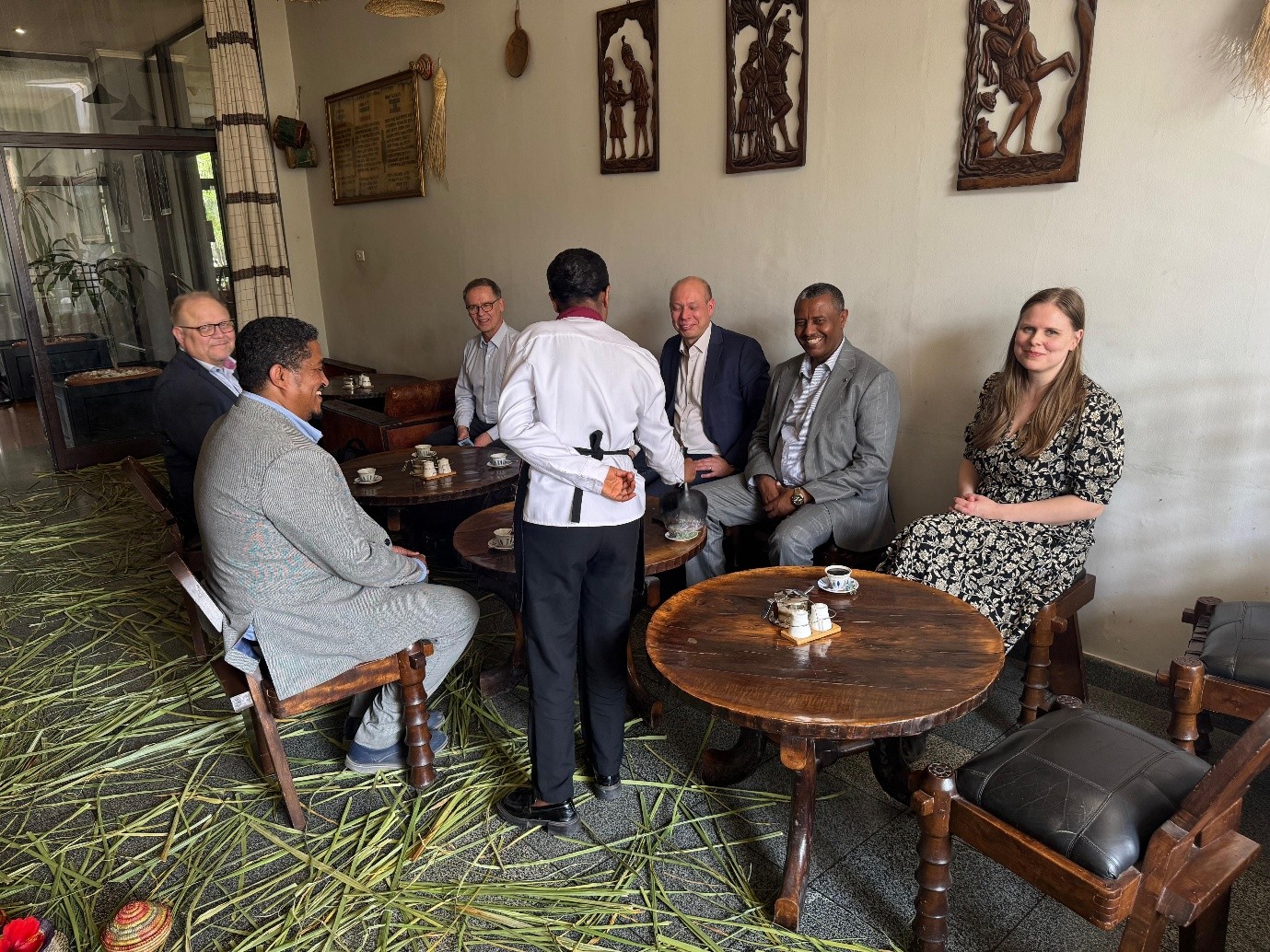
The team got to attend to a traditional Ethiopian coffee ceremony in Hawassa on 25.2.2026. And best of all, the hippo also decided to perform on the beautiful Lake Hawassa near the hotel beach.
From left: Mr. Henock Hailu (EMI), Mr. Esa Kurula (VAISALA OY), Mr. Vesa Koivula (VAISALA OY), Mr. Tomi Särkioja (Embassy of Finland), Mr. Fetene Teshome (EMI), and Mrs. Marilla Visuri (Finnish Meteorological Institute (FMI)).
Final Touches and Moments Before Completion
On 26 February 2026, the whole team gathered in Damboya to admire the results of our joint efforts. The impressive weather station, standing firmly on its own at the top of the hill at over 2,250 meters above sea level, was nearing completion as the final solar panels were being installed. The atmosphere was electric, and the last finishing touches progressed at remarkable speed.
Colleagues from the Embassy of Finland in Addis Ababa, together with the Ethiopian Meteorological Institute, Vaisala, and the Finnish Meteorological Institute, climbed the tower to take in the full scale of the achievement. Spirits were high, smiles were wide, and more than a few handshakes were exchanged in celebration of what this collaboration had produced.
Ethiopia’s national news media, along with local residents, were also present to document and witness this unforgettable moment. With Vaisala’s part of the work now nearly complete, the next steps will focus on trainings facilitated by the Finnish Meteorological Institute—covering, among other topics, operational systems and technical implementation.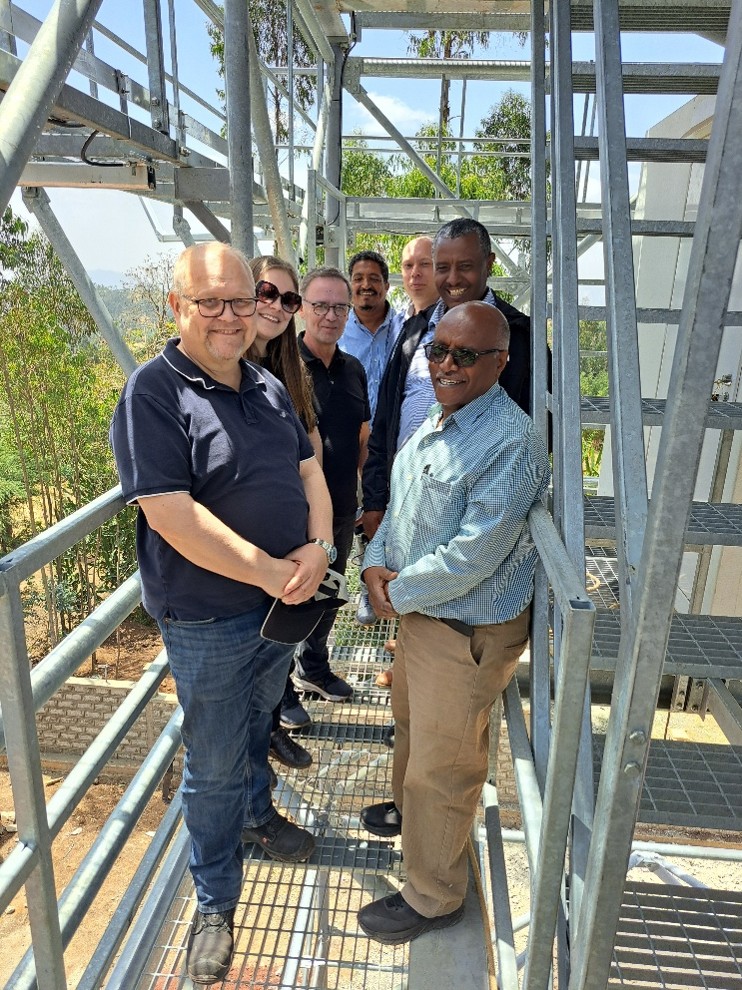
Successful team celebrating at the Weather station in Damboya on 26.2.2026.
From left: Mr. Esa Kurula (VAISALA OY), Mrs. Marilla Visuri (Finnish Meteorological Institute (FMI)), Mr. Vesa Koivula (VAISALA OY), Mr. Henock Hailu (EMI), Mr. Tomi Särkioja (Embassy of Finland), Mr. Fetene Teshome (EMI), and Mr. Gezahegn Alemu (Embassy of Finland).
What the Project Means Now — and for the Future
The new radar-based weather stations located in Enewari (near Debre Berhan), Meko (near Metu), and Damboya (near Alaba Kulito), together with the previously installed Shahura station (near Bahir Dar)—will provide high-quality, continuous data on temperature, humidity, precipitation, wind patterns, and solar radiation, forming a reliable basis for both daily forecasting and long-term climate analysis. This information will serve a wide range of users—from local farmers and community leaders to national meteorological agencies, researchers, and development partners working across the regions. By providing accurate and real‑time environmental data, the stations support smarter agricultural planning, strengthens early‑warning systems, and enhance Ethiopia’s capacity to adapt to climate variability and extreme weather events. The stations will also contribute to broader regional and international cooperation efforts, aligning with long‑term goals in climate monitoring, sustainable development, and capacity‑building between Ethiopia and its global partners.
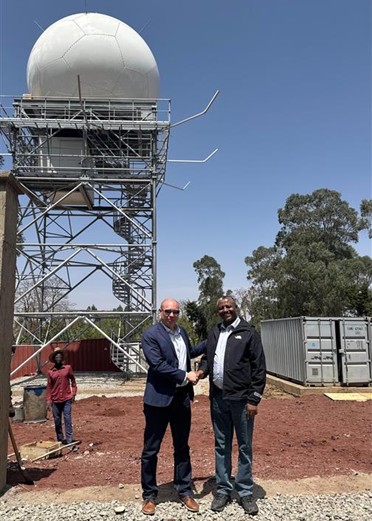
Mr. Tomi Särkioja (Embassy of Finland) & Mr. Fetene Teshome (EMI) shaking hands marking the completion of the Weather station installation on 26.2.2026 in Damboya.
As Mr. Tomi Särkioja, Development Cooperation Head from the Embassy of Finland, noted, this year has showcased strong collaboration and meaningful progress. Ethiopia’s ambitious Vision 2030 and its human‑centric digital transformation will open promising opportunities for deeper cooperation and new business. With upcoming steps like the Business Forum in April, and preparations towards Ethiopia’s 2027 host role COP 32 the journey is far from over. While one project concludes, many new possibilities begin — a moment to congratulate each other and look ahead with confidence.
Text: Aino Järvenpää
Photorights: Project Team Members